
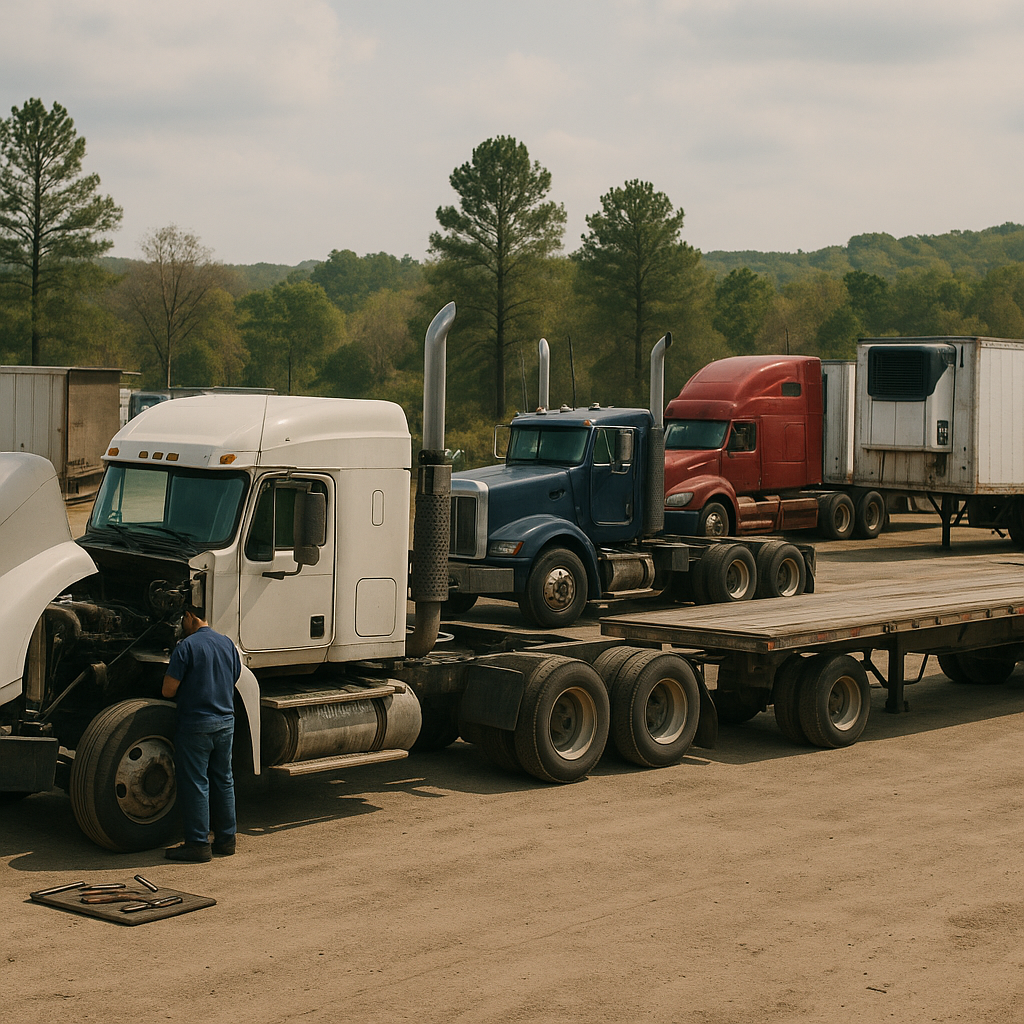
If you’re shopping for food truck insurance south Carolina, the biggest mistake is treating the truck, the kitchen, and the business like one simple risk. They aren’t. A food truck can need vehicle coverage for the road, liability coverage for customers, and extra review for equipment, trailers, or event requirements.
This guide breaks down what usually applies, what changes by setup, and how South Carolina permit and proof-of-insurance questions fit into the picture.
What South Carolina food truck insurance is#
South Carolina food truck insurance is usually a mix of policies that protect different parts of the operation: the vehicle, the mobile kitchen equipment, and the business’s liability to other people. The right setup depends on how you operate, what you serve, where you park, and whether you drive a truck, tow a trailer, or work from a cart.
Food truck insurance isn’t one single policy in plain language. It’s a bundle of coverages that may protect the truck itself, attached equipment, customer-related claims, and some losses tied to operating at events or on rented property.
Truck coverage vs. business coverage#
Commercial auto is insurance for a business-owned or business-used vehicle, including liability for driving-related claims. That part follows the truck on the road.
General liability is insurance that may cover claims from third parties for things like bodily injury, property damage, or some product-related allegations during normal business operations. That part follows the business side of your operation, not just the vehicle.
A lot of new operators mix those up. Commercial auto handles road exposure. General liability handles many customer and site-related exposures. One doesn’t automatically replace the other.
Why a mobile kitchen needs more than one policy#
A mobile kitchen has risks that happen while driving and risks that happen after you park. A backing accident, a customer slip, hot food injury allegations, or damage claims from an event site don’t all fall under the same coverage line.
Physical setup matters too. A truck with built-in cooking equipment, a tow-behind food trailer, and a pop-up vendor setup may all look similar to a customer, but they don’t quote the same way.
Who usually needs it#
Most operators who own or run a self-propelled food truck need commercial auto review at a minimum. If you serve the public, attend events, use commissary space, or work with venues that require certificates, you usually need business liability review too.
If you carry expensive built-in equipment, tow a trailer, use refrigeration, or have an LLC, those details should be reflected in the quote. An LLC is a limited liability company, which is a legal business structure rather than an insurance policy.
Which coverages food trucks usually review#
Most South Carolina food truck operators review commercial auto, general liability, and physical damage first, then add other coverage only if it matches the setup. The main point is simple: driving risk, customer risk, and equipment risk are different, so your quote should separate them instead of hiding everything under one vague label.
Commercial auto for the vehicle#
Commercial auto usually covers driving-related liability and can also include damage coverage for the vehicle if you choose it. If the truck is titled to the business or used for business, personal auto typically isn’t the right fit.
For some readers, federal trucking terms create confusion here. Under 49 CFR Part 387, federal minimum financial responsibility rules apply to certain for-hire motor carriers, but a local food truck operating as a mobile restaurant usually shouldn’t assume those FMCSA trucking rules define its insurance needs. The policy still needs to fit the actual vehicle use and any state registration requirements.
General liability for customer and site claims#
General liability usually handles claims tied to the business side of operations, such as customer injuries near the serving window, some third-party property damage, or allegations tied to products sold. It’s often the coverage event organizers, landlords, and municipalities ask about when they request proof of insurance.
This is where operators get burned. A permit office or festival may ask for a certificate, but the certificate only proves a policy exists. It doesn’t guarantee the limits, insured names, or coverage terms actually match the event or your business model.
If you’re staring at a quote that feels cheap until you read the fine print, that’s the moment to slow down and ask what it really covers. If you’re not sure what fits your setup,
Physical damage for the truck and equipment#
Physical damage is coverage for damage to your own vehicle, usually including collision and comprehensive-type causes of loss depending on the policy. For a food truck, this can be critical because the truck itself may be one of the biggest business assets you own.
Built-in kitchen equipment isn’t always as simple as “it’s part of the truck, so it’s covered.” Some equipment values, permanently attached upgrades, generators, or customized installations need separate review so they aren’t underinsured.
Cargo, trailer, and refrigeration-related options#
Some operators also need extra review for trailer exposures, detached equipment, or refrigeration-related losses. A food trailer is a towable food-service unit that is not self-propelled, which means the insurance structure can differ from a food truck.
A self-propelled truck and a trailer setup should never be quoted as if they’re identical. If refrigeration drives your menu, you also want to ask whether spoilage or breakdown-related losses are addressed anywhere in the policy structure.

South Carolina licensing and proof-of-insurance basics#
South Carolina food truck operators often need to show compliance to more than one authority, and proof of insurance may be requested by some of them. The key is separating food-service permits from vehicle insurance and separating local operating approval from federal trucking rules that may not apply to a typical mobile kitchen.
Where insurance proof may be requested#
The South Carolina Department of Public Health handles core public health oversight for food-service operations, including mobile food units. Local jurisdictions, event venues, landlords, and commissary arrangements may also request proof of insurance before letting you operate.
That proof often comes in the form of a certificate of insurance. A certificate is a summary document showing policy information and named insured details; it is not the full policy.
How permits and insurance interact#
Permit and inspection requirements focus on whether you can legally prepare and serve food in a mobile setup. Insurance focuses on how financial risk is handled if there’s an accident, claim, or loss.
Those systems overlap, but they aren’t the same thing. You might have a valid health permit and still have a bad insurance setup. You might also have insurance that doesn’t satisfy a venue’s certificate wording or additional insured request.
So don’t assume a permit checklist equals a complete insurance program. It usually doesn’t.
Why state rules are not the same as FMCSA rules#
The FMCSA regulates interstate commercial motor carrier operations, and readers often run into terms like USDOT number and MC number while researching vehicle insurance. A USDOT number identifies a commercial carrier in federal safety systems, while an MC number is federal operating authority for certain for-hire interstate operations.
For a typical South Carolina food truck, those federal trucking concepts may be irrelevant or only partly relevant. They are separate from local food-service approval. If you aren’t operating as a for-hire interstate motor carrier, don’t assume FMCSA liability rules under federal law define your food truck insurance program.
That matters because people regularly mix up “commercial vehicle” with “interstate trucking.” They’re not the same thing.
How much food truck insurance may cost#
Food truck insurance cost in South Carolina varies based on the truck, the business, and how the operation actually runs day to day. There isn’t one universal monthly number for a food truck, and a quote only makes sense when you compare the limits, deductibles, exclusions, equipment values, and whether it was built for a truck, trailer, or vendor-style setup.
Main cost drivers#
The biggest factors usually include truck value, where and how often you drive, driver history, operating radius, liability limits, food-service exposure, and whether the unit is self-propelled or towable. Added equipment, customized build-outs, refrigeration, and event frequency can also change the picture.
If two businesses both say “food truck,” that still may not mean they belong in the same insurance bucket. One could be a daily urban route with expensive installed equipment. Another could be a weekend event truck with limited mileage.
Why quotes vary by setup#
The most common cost mistake is comparing a stripped-down liability quote to a broader package and assuming one is overpriced. It may just be covering more of the real exposure.
That’s also why searches like “How much is $1,000,000 liability insurance a month?” don’t have one honest answer. Your actual premium depends on your operation, vehicle, driver record, limits, radius, and other factors.
How to judge whether a quote makes sense#
Use a simple comparison method. Check whether the quote includes the same liability limit, the same deductible structure, the same vehicle value, the same listed drivers, and the same treatment of trailers or specialized equipment.
Then look for exclusions. A lower premium isn’t useful if the quote leaves out the part of the business that actually creates the risk.
Food truck vs. food trailer, cart, and vendor coverage#
Food trucks, food trailers, food carts, and vendor setups can look similar from the outside, but they often need different insurance structures. The biggest difference is whether the unit drives itself, gets towed, or stays mostly stationary, because that changes the vehicle exposure, policy wording, and what should be scheduled on the quote.
When the truck is the business#
A self-propelled food truck combines transportation and food service in one asset. That means the quote usually needs to account for road use, business liability, and damage to the truck itself.
When the truck is the kitchen, losing the vehicle can mean losing your storefront too. That makes valuation and downtime planning more important than many new owners expect.
When the trailer changes the quote#
A trailer setup can add separate questions about the trailer’s value, the towing vehicle, and whether equipment is built into the trailer or handled elsewhere. A quote built for a self-propelled truck may miss key trailer details.
That’s one reason food trailer insurance shouldn’t be treated as a copy-and-paste version of food truck insurance south Carolina. Similar business, different exposure.
When cart or vendor coverage may be different#
A food cart is a smaller mobile food-service unit that may not have the same driving exposure, cooking equipment profile, or property values as a truck. Some vendor setups are mostly event-based and need a different mix of general liability and property review.
The danger is buying a policy built for the wrong setup because the label sounded close enough. That’s how gaps start.
How to choose a policy without gaps#
The safest way to choose food truck insurance is to make sure the quote matches your exact setup before you compare price. That means confirming whether the policy was built for a self-propelled truck, a towable trailer, or a mixed operation, then reading the details line by line so you can spot missing drivers, undervalued equipment, or exclusions that don’t fit how you actually work.
Match the policy to your setup#
Start with the basics: truck, trailer, cart, or some combination. Then confirm ownership, business name, who drives, where you operate, and whether events or venue contracts create extra certificate requirements.
If your business is formed as an LLC, make sure the named insured reflects that correctly where appropriate. But remember, LLC status and insurance design are different issues.
Read the quote line by line#
The NAIC offers plain-language consumer guidance that can help when you’re comparing policy terms and limits. The useful mindset is simple: don’t compare premiums until you’ve compared what each quote actually insures.
Check these items carefully:
- Named insured
- Listed drivers
- Liability limits
- Deductibles
- Vehicle value
- Built-in equipment treatment
- Trailer terms
- Exclusions tied to food-service operations
Avoid common coverage mistakes#
Common mistakes include using the wrong vehicle classification, forgetting to mention a trailer, underreporting customized equipment, or assuming a certificate request means “any liability policy will do.” Another common one is believing an LLC replaces the need for the right insurance. It doesn’t.
Before you buy, ask one blunt question: does this quote cover the truck, the business, or both?
How to get started with a South Carolina quote#
A good South Carolina food truck insurance quote starts with complete, accurate information. The more clearly you describe the vehicle, business operations, and any trailer or event exposure, the easier it is to spot gaps before you bind coverage.
Gather your vehicle details, VIN, garaging address, driver history, operating radius, food-service type, estimated equipment value, and whether you use a trailer, commissary, or frequent event venues. If a permit office or venue needs proof of insurance, ask whether they require special certificate wording or additional insured status.
When talking with a broker, ask whether the quote covers the truck, the business, or both. Then review the insured name, limits, deductibles, and equipment values one more time before binding.
FAQ#
What is the best insurance for a food truck?
The best insurance for a food truck is usually the one built for your actual setup, not the one with the lowest premium or broadest label. Many operators need commercial auto for the vehicle, general liability for customer and site claims, and physical damage for the truck itself. Some also need extra review for trailers, attached equipment, refrigeration, or event requirements. The right mix depends on whether you run a self-propelled truck, tow a trailer, work frequent events, or have customized kitchen equipment that needs to be valued correctly.
What do I need to run a food truck in South Carolina?
To run a food truck in South Carolina, you generally need the right business setup, food-service approval, and insurance that matches both the vehicle and the business operation. The South Carolina Department of Public Health is the core source for mobile food-service permitting and inspection basics, while local governments and event venues may have extra requirements. You may also need proof of insurance for permits, site access, or events. The practical goal is to line up vehicle coverage, business liability, and any certificate requests without assuming one checklist covers everything.
How much is $1,000,000 liability insurance a month?
There isn’t one honest monthly number for $1,000,000 liability insurance because the cost depends on the truck, how it’s used, who drives it, where it operates, what limits and deductibles are chosen, and whether the quote includes only one policy line or a broader package. A monthly payment option also doesn’t tell you much by itself. The better approach is to compare quotes with the same limit, the same drivers, the same vehicle value, and the same exclusions. Otherwise, you’re comparing different products and calling it a price comparison.
Do you have to have an LLC to run a food truck?
No, you don’t automatically need an LLC to run a food truck. An LLC is a business-structure choice, not an insurance requirement. Some owners use an LLC for legal or tax reasons, but insurance should still be chosen based on the actual risks of the operation, including the truck, customer exposure, and any equipment or trailer involved. If you do form an LLC, make sure the quote reflects the correct business name and ownership structure. But don’t assume forming an LLC means you’ve handled liability risk. That’s what the insurance program is for.





