
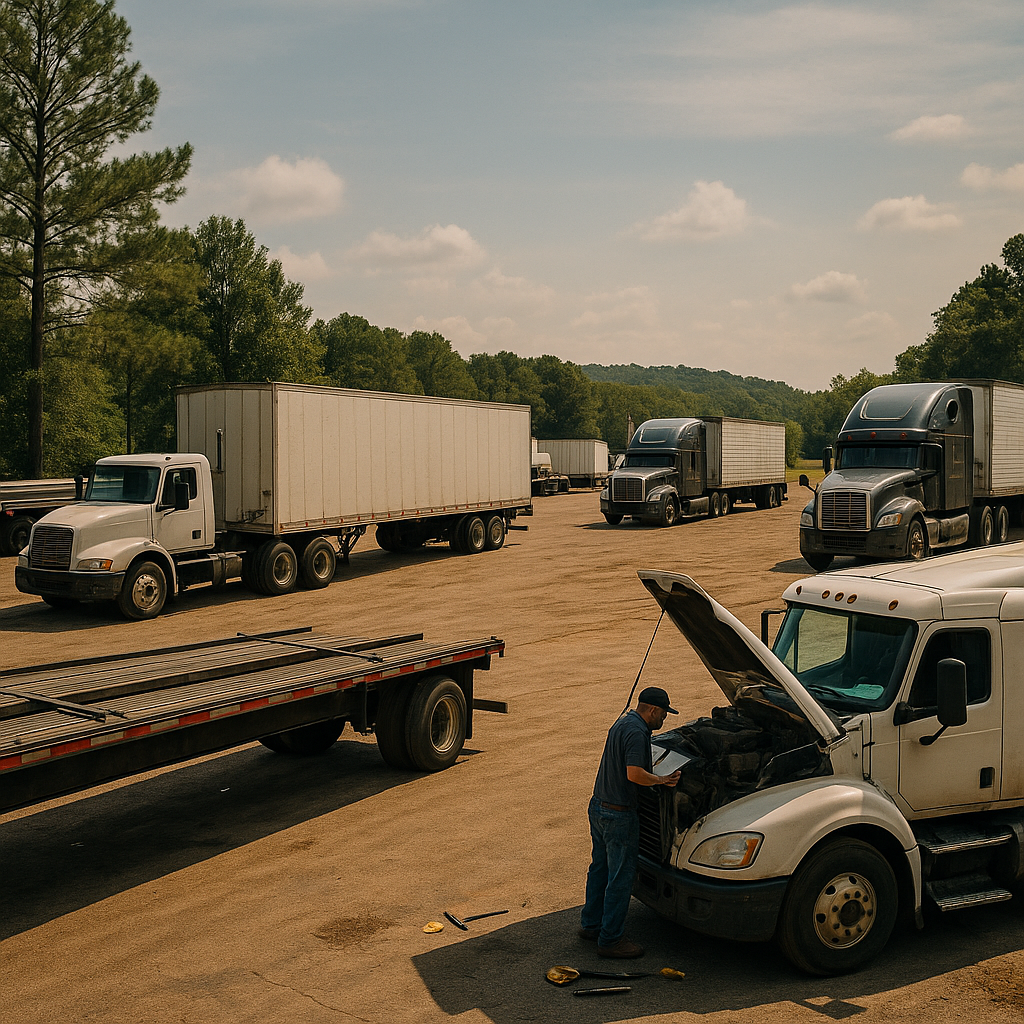
If you’re shopping for hotshot truck insurance South Carolina, the biggest mistake is treating a hotshot setup like personal auto or a one-size-fits-all trucking policy. What you need depends on how you haul, what you haul, what trailer you use, and whether you’re running intrastate in South Carolina or interstate under federal authority.
What South Carolina hotshot truck insurance covers#
South Carolina hotshot truck insurance usually combines liability for damage you cause, protection for your truck and trailer, and optional coverage for cargo or borrowed equipment. The right package depends on whether you’re for-hire, what freight you haul, what trailer setup you use, and whether you operate interstate or intrastate.
Hotshot trucking is a commercial hauling setup, usually built around a pickup and trailer moving time-sensitive loads. Because it’s commercial use, personal auto coverage usually isn’t built for the exposure, even if the truck looks like a personal vehicle from the outside.
Core liability and physical damage coverages#
Auto liability pays for bodily injury and property damage you cause to others in a covered crash. This is the core trucking policy piece tied most directly to operating requirements.
Physical damage covers damage to your insured truck from collision and other covered causes like theft, fire, or weather, depending on how the policy is built. If you want a deeper breakdown of physical damage coverage, it’s worth reviewing before you compare deductibles.
Optional coverages for load and trailer protection#
Motor truck cargo covers the freight you’re hauling if it’s damaged by a covered cause while in transit. If your loads vary, motor truck cargo coverage needs to match the kind of freight you actually take.
Trailer interchange covers physical damage to a trailer in your care when you use it under a written interchange agreement. Many hotshot operators ask about trailer interchange coverage when what they really need depends on whether the trailer is borrowed, rented, or covered by a formal agreement.
General liability covers certain non-driving business claims, like some loading dock or premises-related exposures. Reefer breakdown covers certain losses tied to refrigeration unit failure when you’re hauling temperature-controlled freight.
What a policy does not automatically cover#
A hotshot policy doesn’t automatically include every add-on just because another driver carries it. Non-trucking liability covers certain non-business driving, not paid hauling, and cargo or trailer protection may need to be added separately.
That’s where people get burned. They buy a policy that sounds close enough, then find out it doesn’t fit their authority, freight, or trailer arrangement after a claim or filing issue. If you’re not sure what fits your setup,
The National Association of Insurance Commissioners offers plain-language insurance education at naic.org, which can help if you’re comparing deductibles, exclusions, and policy forms across carriers.
Who needs hotshot insurance in South Carolina#
If you run commercial loads on a pickup-and-trailer hotshot setup in South Carolina, you likely need commercial trucking insurance rather than personal auto. The trigger is the work you’re doing, not just the badge on the truck or whether it looks smaller than a semi.
This article is mainly for owner-operators and small fleets running one to five trucks. Most hotshot insurance questions come from single-truck operators trying to get the right protection before their first load, but the same logic applies to small fleets with similar equipment.
Single-truck owner-operators#
If you’re hauling for-hire loads under your own authority, leased onto another motor carrier, or regularly moving freight for payment, your insurance needs are commercial. A motor carrier is a business that transports property or passengers by commercial motor vehicle.
Small fleets with 2 to 5 trucks#
If you have a few trucks, the issue usually isn’t just adding units. It’s making sure every truck, trailer, driver, and hauling arrangement lines up with the same coverage assumptions.
When hotshot work moves you out of personal auto coverage#
The biggest dividing line is use. If the truck is being used to haul commercial freight, personal auto language usually won’t line up with the exposure, even if it’s a dually pickup and not a tractor.
Your insurance decisions also change based on whether you’re operating under your own authority, hauling for-hire, or leased on. Before you ask for quotes, be ready to describe your operation in one sentence: what truck, what trailer, what freight, whose authority, and where you run.

South Carolina rules vs FMCSA requirements#
South Carolina rules and FMCSA requirements are not the same thing. State insurance rules may apply to vehicle registration or intrastate operation, while federal trucking rules can apply when you’re a for-hire interstate carrier, depending on vehicle weight, commodity, and authority status.
This is where a lot of hotshot operators lose time. They hear a state minimum number, then assume it covers a federal filing requirement. It may not.
State insurance rules#
South Carolina can have its own insurance and registration rules for vehicles operating in the state. Those state-level rules don’t automatically replace federal trucking requirements for interstate for-hire hauling.
Federal trucking requirements#
The FMCSA is the Federal Motor Carrier Safety Administration, the federal agency that regulates interstate commercial motor carriers. Under 49 CFR Part 387, for-hire interstate carriers hauling general freight in vehicles over 10,001 pounds must carry at least $750,000 in public liability, while other operations can face different minimums based on weight, commodity, and carrier type.
That means your South Carolina state minimum is not automatically your federal minimum. You can verify authority and operating status through FMCSA and check carrier records through SAFER.
Why proof of insurance matters before hauling#
MCS-90 is an endorsement used to show certain federally required public liability is in place for covered motor carriers. It is not a blanket requirement for every hotshot driver, and whether it applies depends on your operating profile.
If you’re interstate, for-hire, or applying for authority, get clear on that before you buy. The wrong policy structure can leave you with the wrong filing, the wrong limit, or a delay when you’re ready to haul.
How hotshot truck insurance cost is determined#
Hotshot truck insurance cost depends on the truck, trailer, driver profile, cargo, route pattern, and policy structure. Two trucks that look almost identical can price very differently if one hauls higher-risk freight, runs longer distances, has a newer authority, or needs different filings.
There isn’t one flat price for hotshot insurance in South Carolina. Your actual premium depends on your operation, cargo, radius, driving history, and other factors.
What insurers look at first#
Insurers usually start with the equipment and the operation. That includes truck value, trailer type, hauling radius, garaging location, driver experience, loss history, and whether you’re running under your own authority.
Cargo matters too. A hotshot operator hauling general freight may not be viewed the same way as one moving higher-value or more damage-sensitive loads.
Why quotes differ between similar trucks#
This is why quote comparisons get messy. One quote may assume broader cargo, lower deductibles, or interstate operation, while another assumes a narrower use case.
New ventures can also price differently from established operators with clean history and a well-defined lane profile. So can trucks with expensive aftermarket equipment or trailers that push up replacement cost.
| Factor | Lower-risk example | Higher-risk example | Why it changes cost |
|---|---|---|---|
| Operating radius | Local or shorter regional runs | Longer interstate runs | More road time changes exposure |
| Cargo type | General freight | High-value or sensitive freight | Claim severity can be higher |
| Authority status | Leased-on operation | New venture under own authority | Filing and startup risk differ |
| Equipment value | Older lower-value unit | Newer higher-value unit | Physical damage costs more |
| Trailer setup | Owned trailer | Borrowed or specialized trailer | Coverage needs can expand |
How to reduce avoidable rating surprises#
The best way to control cost is to reduce mismatch. Don’t ask for “full coverage” without explaining your freight, trailer, and authority setup.
Tell the quoting team exactly what you do, even if it makes the intake feel more detailed up front. Clean information usually means fewer re-quotes, fewer endorsement fixes, and less chance that a lower quote turns into a higher one later.
What to buy before your first load#
Before your first load, most hotshot operators should review liability, cargo, and physical damage first, then add trailer or specialty protections only if the operation calls for them. The goal is to match coverage to the truck, trailer, freight, and authority setup before you start hauling, not after a dispatch opportunity shows up.
This is the part new operators rush. They get authority moving, line up a trailer, then realize they still haven’t sorted which policy pieces are required, optional, or irrelevant to their setup.
Minimum policy pieces to review first#
Start with auto liability if you’re hauling commercially. Then review cargo if you’re transporting freight for others, and physical damage if you need protection for your own truck or trailer investment.
Add-ons to consider by cargo and trailer setup#
If you own the trailer, your needs may differ from someone borrowing one. Refrigerated freight can call for reefer breakdown, and leased-on work can change which coverages are carried by you versus the motor carrier you’re working under.
Questions to answer before you request quotes#
Have these answers ready:
- Are you for-hire or private?
- Intrastate only or interstate?
- Under your own authority or leased on?
- What freight will you actually haul?
- Do you own the trailer, borrow it, or use one under agreement?
That short checklist prevents a lot of overbuying and a lot of expensive gaps.
What kind of insurance do you need to be a hotshot driver?#
Most hotshot drivers need auto liability at the center, with cargo and physical damage added when the operation calls for them. Beyond that, the right stack changes based on whether you’re for-hire, leased onto a motor carrier, using your own trailer, hauling under someone else’s authority, or driving the truck off-dispatch for personal use.
There isn’t one universal package. The cleanest way to think about it is by operation type.
Coverage stack by operation type#
If you’re for-hire under your own authority, the usual conversation starts with liability, cargo, and physical damage. If you’re leased onto another carrier, some primary requirements may flow through that arrangement, but you still need to know what you’re responsible for personally.
If you haul freight in different trailer arrangements, trailer protection may need to be added carefully. Not every borrowed trailer situation calls for the same endorsement.
When non-trucking liability matters#
Non-trucking liability covers certain personal-use driving when the truck is not being used in business. It’s useful in some leased-on arrangements, but non-trucking liability does not cover paid hauling, dispatch movement, or normal business use.
When general liability matters#
General liability covers certain non-auto business claims that happen off the road. Some hotshot operators need general liability for trucking because of contracts, shippers, or business activities beyond driving, while others don’t need to add it by default.
The practical move is simple: tell the agent whether you’re under your own authority, leased on, what freight you take, and whether the trailer is owned, borrowed, or covered by agreement. That gets you much closer to the right policy stack.
Ways to save without underinsuring#
You can lower avoidable insurance cost by matching coverage closely to your real operation, not by blindly stripping policy pieces. The safest savings usually come from reducing mismatch, choosing workable deductibles, and giving accurate quote data the first time.
Start with the coverages you actually need. If your cargo is limited, your trailer setup is straightforward, and your filing requirements are clear, your quote can be cleaner than someone asking for broad protections they may not use.
Also watch avoidable friction. Wrong garaging, vague cargo descriptions, unclear authority status, or last-minute trailer details can all trigger re-rating.
And don’t shop quotes on different assumptions. A cheaper-looking quote may only look cheaper because it carries different deductibles, narrower cargo language, or fewer endorsements.
Is hotshot trucking worth it in 2026?#
Hotshot trucking can be worth it in 2026 if the freight opportunity, equipment costs, and insurance costs all support your business model. It is usually not worth it when the operator starts with fuzzy numbers, the wrong equipment plan, or no clear idea of what freight they can realistically haul.
Insurance is only one line item, but it’s an important one. If the premium feels high, that may be telling you something about your setup, your authority structure, or the kind of freight you’re planning to chase.
What to weigh before starting#
Look at demand, deadhead risk, truck and trailer expense, maintenance, and downtime. Then add insurance as part of the real operating picture, not as an afterthought.
How insurance fits the business case#
Insurance should support the operation you’re actually building. If you need filings, cargo, or equipment protection, price those in before you decide the business works.
When it makes sense to pause and re-check the numbers#
If you’re still deciding whether to start, pause before binding a policy built on assumptions. It makes more sense to tighten up the business plan first than to buy the wrong coverage package and rebuild it later.
How to compare South Carolina hotshot insurance quotes#
To compare South Carolina hotshot insurance quotes well, gather your operating details first, then compare coverage scope instead of premium alone. The best quote is the one that matches your truck, trailer, freight, authority, filings, and deductible comfort level without leaving hidden gaps.
Fast quoting starts with clean information. Slow quoting usually starts with missing details.
What to have ready before you request quotes#
Have your truck and trailer info, garaging address, driver details, operating radius, cargo type, authority status, and ownership or interchange details ready. If you’re already active, verify your carrier record on SAFER before quoting so the operation details line up.
What to compare beyond the premium#
Check liability scope, cargo terms, deductibles, physical damage values, trailer coverage, exclusions, and whether any filing needs are being handled correctly. Two quotes are not equal just because the monthly number looks close.
When to ask for help matching a policy#
Ask for human help when your setup is unusual, your trailer situation is messy, or you’re not sure whether you’re being quoted for the right operation type. That’s especially true if you’re a first-time owner-operator trying to move quickly without buying the wrong thing.
FAQ#
What is the best insurance for hotshot trucking?
The best insurance for hotshot trucking is the policy package that matches your truck, trailer, cargo, authority, and filing needs. For many operators, auto liability is the foundation, with motor truck cargo and physical damage added based on what they’re hauling and what equipment they need to protect.
Beyond that, optional coverages should solve real exposure gaps, not just copy another driver’s setup. Non-trucking liability, general liability, trailer protection, and reefer breakdown each have specific uses. A good comparison starts with your actual operation, not a generic “hotshot policy” label.
How much is insurance for a Hotshot truck?
Insurance for a hotshot truck varies based on truck value, trailer type, freight, driving record, operating radius, authority status, and the coverages selected. New ventures, higher-value equipment, broader cargo needs, and interstate filings can all change the premium.
The best way to compare cost is to make sure every quote uses the same assumptions. If one quote includes cargo, physical damage, and trailer protection while another does not, you’re not comparing prices fairly. Your actual premium depends on your operation, cargo, radius, driving history, and other factors.
What kind of insurance do you need to be a hotshot driver?
Most hotshot drivers need commercial auto liability at the center of the policy. Depending on the operation, they may also need motor truck cargo, physical damage, trailer-related coverage, general liability, or reefer breakdown.
If you’re leased onto another motor carrier, you may also need to sort out where your responsibility starts and stops versus the carrier’s coverage. Non-trucking liability can matter in some leased-on situations for personal-use driving, but it does not replace business-use liability. The right stack depends on whether you’re for-hire, under your own authority, leased on, and what freight and trailer setup you use.
Is Hotshot trucking worth it in 2026?
Hotshot trucking can be worth it in 2026, but only if the numbers work for your actual market and setup. Freight opportunity, equipment costs, maintenance, downtime, and insurance all need to support the business instead of getting penciled in as guesses.
For some operators, a lean hotshot setup fits well and creates flexibility. For others, the margins get tight fast if the wrong truck, trailer, cargo niche, or insurance structure is chosen. If you’re still deciding, build the business case first and then buy coverage that supports it, rather than buying a policy and hoping the loads show up.





