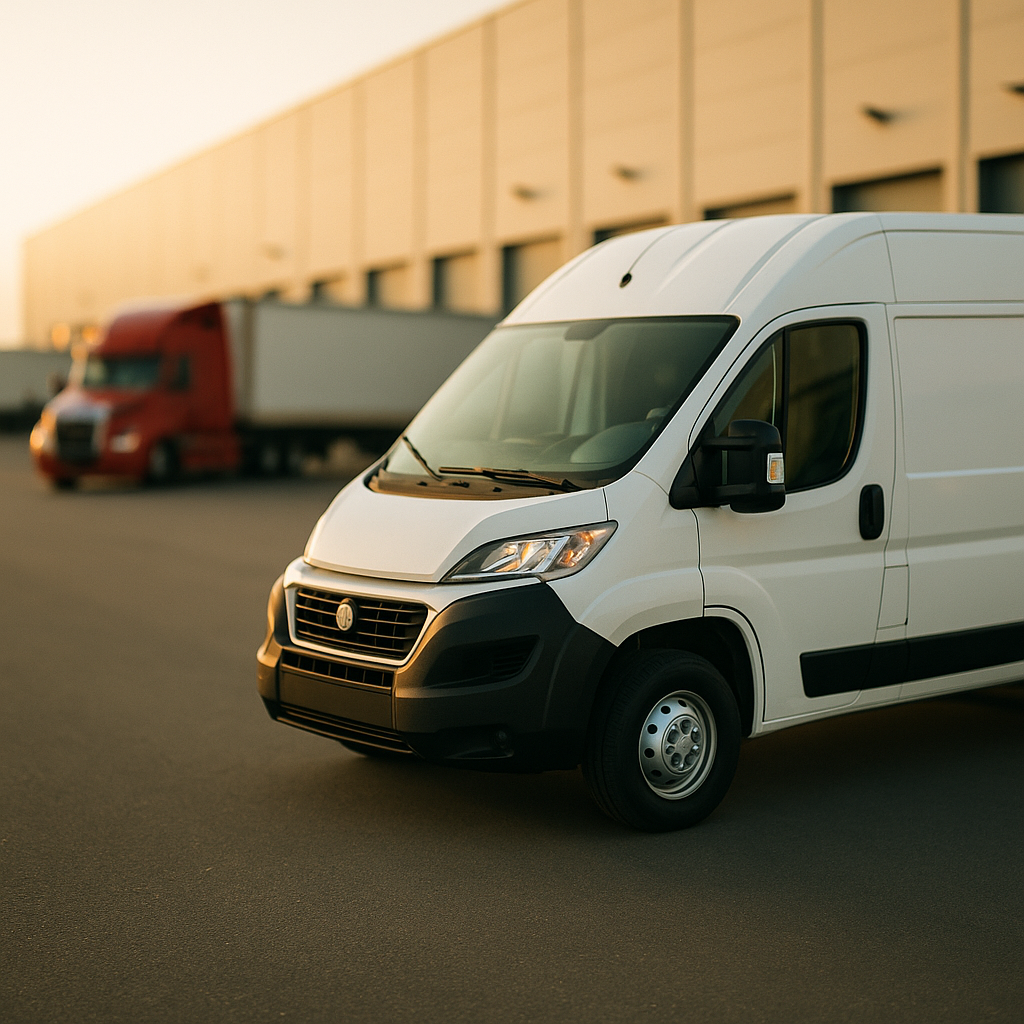

Cargo van insurance typically runs $1,200–$7,500+/yr. Compare liability-only vs full package costs, key rate drivers, and get a quote fast.
Cargo van insurance typically costs $1,200–$3,500 per year for liability-only and $2,500–$7,500+ per year for a full package (liability + comprehensive/collision + optional cargo), with price driven most by garaging ZIP, use type, radius, driving record, and van value.
If you’re delivering, hauling tools, or running for-hire freight, your van isn’t “just a vehicle”—it’s your revenue. For a bigger-picture view of where cargo vans fit inside commercial auto options, start with this commercial van insurance guide.
Table of Contents
Reading time: 8 minutes
👉 Prefer watching a quick video about cargo van insurance?
Watch the video below for a quick overview of cargo van insurance rules, how much it costs, and practical ways to save. Or give us a call: (704) 290-3630
Key takeaways (save this before you start shopping)
In 2026, most cargo van operators see annual premiums fall into two working ranges—$1,200–$3,500/year for liability-only and $2,500–$7,500+/year for a full coverage package—depending on operation type and territory.
- Expect wide pricing: two similar vans can price 2–3x apart due to garaging ZIP, delivery density, radius, and driver history.
- “Full coverage” isn’t a standard package: limits + deductibles define what you’re actually buying (not the label).
- Contracts drive coverage more than laws: many courier/expedite gigs require specific liability and cargo limits even when the state doesn’t.
- Fastest path to a better premium: keep coverage continuous, choose realistic deductibles, and submit consistent info to multiple carriers.

2026 cargo van insurance cost snapshot (benchmarks + multi-state reality)
In 2026, cargo van insurance pricing commonly lands around $100–$292/month for liability-only and $208–$625+/month for a full package when the van is correctly rated for commercial use.
What it is (plain English)
These numbers are practical benchmarks, not guaranteed averages, because commercial auto is underwritten based on your ZIP, drivers, vehicle, and operation details.
Typical annual ranges (liability-only vs full package)
| Package | What’s usually included | Typical annual range | Typical monthly range* |
|---|---|---|---|
| Liability-only | Bodily injury + property damage you cause | $1,200–$3,500/yr | $100–$292/mo |
| Full package (“full coverage”) | Liability + comp/collision + optional add-ons (often cargo) | $2,500–$7,500+/yr | $208–$625+/mo |
*Monthly billing depends on down payment, billing fees, and whether you’re financing the premium.
Why two cargo vans can be priced totally differently
Commercial auto underwriters price the risk of your operation as much as the van itself, which is why the same vehicle can quote wildly different premiums.
- Garaging ZIP: theft frequency, crash trends, repair costs, and litigation environment.
- Use type: service van vs last-mile delivery vs for-hire hauling.
- Radius & mileage: local (0–50) vs regional (0–500) vs multi-state exposure.
- MVR/claims: tickets, at-fault losses, and any lapse in coverage.
- Van value & deductibles: physical damage exposure changes fast with higher values and lower deductibles.
If you want the deeper “why your quote swings,” read what affects commercial auto insurance rates.
Multi-state price differences (directional table)
Rates can vary significantly by state and metro area even with the same driver, van, and coverages, because claim severity and repair/litigation costs are local.
| Market (example) | Relative pricing | What usually drives it |
|---|---|---|
| FL (South Florida metros) | High | Litigation, injury severity, density |
| NY/NJ metros | High | Congestion, claim cost, repairs |
| CA metros | High | Traffic, repair costs, theft |
| TX major metros | Med–High | Miles driven, crash frequency |
| IL (Chicagoland) | Med–High | Density + claim severity |
| GA (Atlanta area) | Med–High | Congestion + loss trends |
| OH/IN | Medium | Mixed urban/rural exposure |
| TN/NC | Medium | Wide metro vs rural spread |
| AZ | Medium | Theft pockets, weather/heat |
| IA/NE/KS | Low–Med | Lower density in many areas |
Cash-flow tip: if your van is your only unit, compare policies based on downtime risk as much as premium—saving $200/month won’t feel like a win if a claim stalls and you can’t work.
Do you need commercial cargo van insurance (or is personal auto enough)?
Commercial cargo van insurance is a business-use commercial auto policy, and many personal auto policies restrict or exclude for-hire delivery and other regular business operations.
Why it’s essential (claim-denial risk is the real issue)
The biggest problem with “getting by” on the wrong policy isn’t the premium—it’s the claim. If the insurer decides the loss happened during excluded business use, you can end up paying repairs, liability, and lost income out of pocket.
- Contracts: customers, brokers, and dispatch platforms often require COIs, additional insureds, and specific limits.
- Lease-on arrangements: if you operate under another company, they may require specific coverages and limit structures.
- Filings/authority (some operations): certain for-hire interstate setups require federal filings; FMCSA lists insurance filing requirements here: https://www.fmcsa.dot.gov/registration/insurance-filing-requirements.
Who needs it (quick self-check)
You likely need commercial coverage if you do any of the following consistently for pay:
- Courier, last-mile delivery, or expedited work (paid freight or parcels)
- Hauling tools/materials as part of a service business (HVAC, plumbing, construction)
- Running routes for a platform/dispatcher that asks for a certificate of insurance (COI)
- Driving daily under a business name or branded vehicle
Interstate vs intrastate (and why “authority” sometimes matters)
FMCSA’s common baseline for for-hire interstate motor carriers transporting non-hazardous property is $750,000 in public liability, but not every cargo van operation falls into that filing/authority category.
If you’re unsure whether you’re in “basic commercial auto” territory or “trucking insurance + filings/authority” territory, read trucking insurance filings and DOT authority basics.
Rating tip: don’t “guess” your use type during quoting (service vs delivery vs for-hire). Misrating can trigger mid-term re-quotes or claim disputes when it matters most.
Cargo van insurance coverages explained (and what each one really does)
A cargo van policy is usually priced as liability premium + physical damage premium + optional coverages (cargo, UM/UIM, Med Pay/PIP), and each piece protects a different part of your cash flow.
Coverage matrix (quick decision tool)
| Coverage | Protects | Who typically needs it | Cost impact |
|---|---|---|---|
| Auto liability | Injuries/property damage you cause | Everyone using a van for business | High (core premium) |
| Comprehensive | Theft, vandalism, hail, fire, animal strikes | Outdoor parking, theft-heavy areas | Medium |
| Collision | Your van in at-fault impact/rollover | Financed/leased vans; low cash reserves | Medium–High |
| Cargo insurance | The goods you’re responsible for | For-hire/courier/expedite; contract-driven | Low–Med (varies by limit/commodity) |
| UM/UIM, Med Pay/PIP | Injuries to you/your driver | State + risk tolerance dependent | Low–Med |
| Hired/Non-Owned (if applicable) | Liability for rented/borrowed vehicles | Businesses that rent/borrow vehicles | Low–Med |
Liability (the foundation of most quotes)
Liability coverage pays for third-party injury and property damage you cause, and it’s the core premium driver for most cargo van policies.
Physical damage (comprehensive + collision)
Comprehensive and collision protect your van itself, and the premium is heavily influenced by van value, repair costs in your area, and your deductible choices.
Cargo coverage (often “required” by the real world)
Cargo insurance covers the freight you’re responsible for, and many shippers/brokers require it even when there’s no legal mandate for your specific operation.
For common limits and the exclusions that trip people up (like unattended vehicle and certain high-value commodities), see cargo insurance limits and exclusions.
Real operator scenarios (illustrative profiles, not guaranteed quotes)
- Local service van (tools, not for-hire freight): often trends toward the lower end if miles are controlled and MVR is clean.
- Urban last-mile delivery (lots of stops/backing/parking): often trends mid-to-high due to frequency risk.
- For-hire / expedited cargo: commonly needs higher limits and cargo coverage, and sometimes filings depending on operation.
How to get an accurate cargo van insurance quote (checklist) + how to lower the premium
An accurate cargo van insurance quote depends on consistent underwriting inputs—garaging address, use type, radius, mileage, drivers, VIN, and target limits—because small changes can trigger a re-quote.
If you want a clean, apples-to-apples submission, use this cargo van insurance quote checklist.
Quote checklist (gather this before you call anyone)
- Business: legal name/DBA, EIN (if applicable), years in business, garaging address.
- Vehicle: VIN, year/make/model, value, lienholder info (if financed).
- Operations: use type (service/delivery/for-hire), radius (0–50, 0–200, 0–500, multi-state), annual mileage, commodity hauled, overnight parking.
- Drivers: license info, DOB, experience, tickets/accidents (be consistent on 3–5 years).
- Coverage targets: liability limit, comp/collision deductibles, cargo limit (max value carried at one time), COI needs.
Verification tip (if you run under your own authority)
FMCSA’s SAFER system provides public snapshots of authority and related records here: https://safer.fmcsa.dot.gov/.
How to lower your cargo van insurance premium (without getting underinsured)
- Pick deductibles you can pay immediately: the cheapest premium can become expensive downtime after a loss.
- Keep continuous coverage: lapses are a common underwriting red flag.
- Tighten radius and mileage when possible: fewer miles usually means less exposure.
- Improve driver quality: one bad MVR can erase the benefit of shopping multiple quotes.
- Add basic controls: dashcam, secure parking, and a simple driver policy (even if it’s just you).
If deductible strategy is where you’re stuck, read commercial auto insurance deductibles explained.
Frequently Asked Questions
These cargo van insurance FAQs cover the most-cited 2026 price ranges ($100–$625+/month) plus the underwriting factors and coverage choices that move your premium the most.
Cargo van insurance typically costs $100–$292 per month for liability-only and $208–$625+ per month for a full package, assuming the van is correctly rated for commercial use and your billing plan doesn’t add heavy fees.
The fastest “swing factors” are garaging ZIP (theft/claims trends), delivery density (lots of stops/backing), operating radius (0–50 vs 0–500+), and your MVR/claims history. Monthly payments can also look higher than the “true premium” if there’s a large down payment or you’re financing the policy.
Cargo van insurance commonly runs $1,200–$3,500 per year for liability-only and $2,500–$7,500+ per year for full coverage (liability + comprehensive/collision + optional add-ons like cargo).
The biggest drivers are (1) territory/garaging ZIP, (2) use type (service vs last-mile delivery vs for-hire), (3) radius and mileage, and (4) driver history and prior claims. If your van is financed, comp/collision is often required by the lienholder, which pushes you toward the full-package range.
The top cargo van insurance rate drivers are garaging ZIP, use type, operating radius/mileage, MVR and claims history, years in business, and van value plus deductibles.
If you’re trying to lower premium without gutting coverage, focus on continuous coverage (avoid lapses), realistic radius/miles, and deductibles you can actually pay tomorrow. For a practical deductible breakdown—what you save vs what you risk—see commercial auto insurance deductibles explained.
You need cargo insurance if your contracts require it or you’re financially responsible for the freight, because shippers, brokers, and dispatch platforms often require specific cargo limits even when the state doesn’t mandate them.
Choose a cargo limit based on the maximum value you’ll carry at one time, not an “average day,” and read exclusions carefully (unattended vehicle, electronics/high-value items, specific commodities, and theft conditions). For common limits and the fine print that causes denials, see cargo insurance limits and exclusions.
Conclusion: Price your cargo van insurance on your operation, not averages
For 2026, a realistic cargo van insurance budget is $1,200–$3,500/year for liability-only and $2,500–$7,500+/year for a full package, with the biggest swings coming from ZIP, use type, radius, and driver history.
Your best move is to quote with clean, consistent inputs, match your limits to contract requirements, and pick deductibles that won’t shut you down after a loss.
Key Takeaways:
- Use type (service vs delivery vs for-hire) is one of the most important pricing and coverage triggers.
- “Full coverage” only matters if the limits and deductibles fit your risk and cash flow.
- Get apples-to-apples quotes by keeping radius, mileage, drivers, and limits consistent across carriers.
If you’re scaling beyond vans, these next reads help you map the insurance jump: hotshot insurance requirements and cost and semi truck insurance cost and coverage.